Bringing a new puppy home is a whirlwind of pure joy, clumsy cuddles, and the start of an unbreakable bond. In these precious early days, every choice you make feels monumental, especially when it comes to their food. You’re not just filling a bowl; you’re building the very foundations of a long, healthy, and vibrant life for your new best mate. The world of puppy nutrition can feel overwhelming, but we’re here to guide you through it with warmth and clarity.
This guide is your sanctuary. It’s a place to quiet the noise of conflicting advice and gain the confidence to choose the perfect puppy food. We’ll help you understand what your growing companion truly needs to support their developing bones, sharpen their curious mind, and fuel a lifetime of happy tail wags.
The Foundation of Vitality: Why Specialised Puppy Food Matters
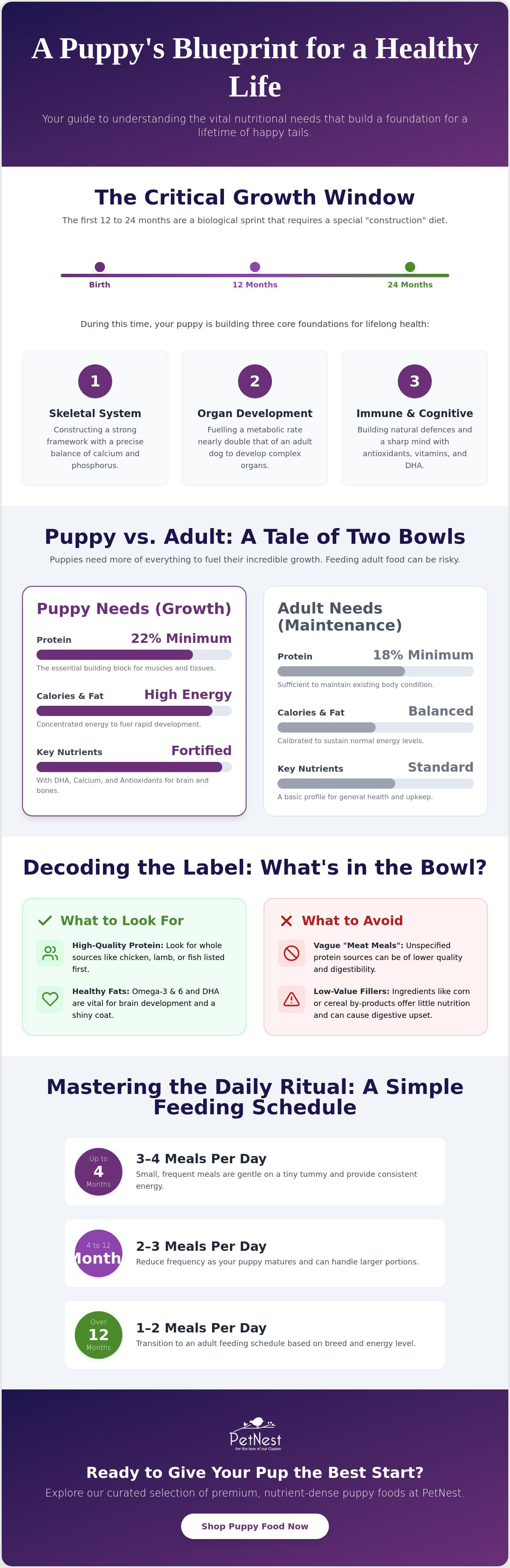
Puppy food is more than just a smaller version of adult dog kibble. It is a precisely engineered, nutrient-dense formulation designed to fuel the most critical growth period of your dog’s life, typically the first 12 to 24 months. Think of this time as a "growth window"—a limited opportunity where their bones, organs, brain, and immune system are developing at an astonishing rate. What you feed them now directly influences their health and resilience for years to come.
Unlike adult dogs who require food for maintenance, puppies are in a state of constant construction. Their food must contain significantly higher levels of protein, fat, and specific minerals to keep up with this biological sprint. This is why "all-life-stages" food can be a risky choice for a puppy; it often lacks the concentrated nutrition needed for optimal development and can sometimes provide dangerous levels of certain minerals, like calcium, for large-breed pups. The right puppy food acts as a protector’s shield, building a strong biological defence against future health hurdles.
The Biological Sprint: What Happens Inside Your Pup
To truly appreciate the need for specialised puppy food, it helps to understand the incredible transformation happening inside their tiny body. In the first six months alone, a puppy undergoes rapid skeletal development, with their bones lengthening and strengthening daily. Their metabolic rate is sky-high, burning through energy at nearly twice the rate of an adult dog to fuel this growth, play, and learning. Furthermore, as they transition away from their mother's milk, their own immune system is just learning to stand on its own. A high-quality puppy diet provides essential nutrients to support these new defences, keeping them protected during this vulnerable period.
Supermarket vs. Premium: Is There a Real Difference?
Walking down the pet food aisle, the price difference between supermarket and premium brands can be stark. It's natural to wonder if the extra cost is justified. The answer lies in the quality and bioavailability of the ingredients. Premium puppy foods prioritise high-quality, easily digestible protein sources like named meats (e.g., chicken, lamb, fish) as their primary ingredients. In contrast, many budget options rely on cheaper "fillers" like corn, soy, and ambiguous meat by-products, which offer less nutritional value.
The concept of high bioavailability is key: it means your puppy's body can absorb and utilise more nutrients from a smaller amount of food. This often results in smaller, firmer stools and means a bag of premium food can last longer than you might expect. Viewing this choice as a long-term investment in your dog’s well-being is helpful. Exceptional nutrition now can lead to a stronger immune system, healthier joints, and fewer vet visits down the track, making it a profoundly loving and financially savvy decision.
Decoding the Label: Essential Nutrients for Growing Paws
Learning to read an ingredient label is one of the most empowering skills a new pet parent can develop. Instead of being swayed by flashy packaging, you can focus on the core components that will build your puppy from the inside out. Here are the non-negotiables for a growing pup.
- High-Quality Proteins: These are the fundamental building blocks of life, essential for developing strong muscles, healthy organs, and resilient tissues. Look for named animal proteins at the top of the ingredient list.
- DHA (Docosahexaenoic Acid): This specific omega-3 fatty acid is a powerhouse for brain and eye development. It's the nutrient that fuels learning, memory, and trainability.
- Critical Calcium to Phosphorus Ratio: Strong bones don't just happen; they are built with a precise balance of minerals. The correct ratio of calcium to phosphorus is vital for steady, sound skeletal growth, especially in large breeds.
- Healthy Fats and Omegas: Fats are a crucial source of concentrated energy for your active pup. Omega-3 and Omega-6 fatty acids are particularly important for reducing inflammation and developing that signature soft, shiny puppy coat.
Brain Food: Why DHA is a Puppy Essential
If protein builds the body, DHA builds the brain. This remarkable nutrient is a major structural component of the brain and the retina, directly impacting cognitive function and vision. Studies have shown that puppies fed diets rich in DHA are often easier to train and demonstrate better memory and problem-solving skills. Common sources include fish oil (like salmon oil) and algae. Think of DHA as the fuel for puppy curiosity, empowering them to learn about and joyfully engage with the world around them.
The Bone Building Balance: Calcium and Phosphorus
While calcium is essential for strong bones, more is not better. In fact, over-supplementation can be dangerous, potentially leading to developmental orthopaedic diseases like Nutritional Secondary Hyperparathyroidism, particularly in large and giant breed puppies who are genetically predisposed to grow very quickly. A premium, breed-size-appropriate puppy food is formulated by animal nutritionists to provide the perfect ratio of these minerals, taking the guesswork and worry out of your hands. It ensures their skeleton develops at a controlled, healthy pace, setting them up for a lifetime of sound mobility.
Tailoring the Bowl: Finding the Right Match for Every Breed
One size never fits all, especially in the diverse world of dogs. The nutritional needs of a Great Dane puppy, destined to weigh over 50kg, are vastly different from those of a Toy Poodle who will barely tip the scales at 3kg. Recognising and catering to these differences is a cornerstone of responsible puppy care.
Small breeds have incredibly fast metabolisms and need a more calorie-dense food to fuel their energy levels, often delivered in a smaller kibble size that's easy for their tiny jaws to manage. Conversely, large and giant breeds require a diet with slightly lower calorie and fat levels and a meticulously controlled calcium-to-phosphorus ratio to prevent them from growing too quickly, which can put immense strain on their developing joints. For puppies with sensitive stomachs or skin, a grain-free puppy food can also be a sanctuary, providing all the essential growth nutrients without common grain triggers.
Small vs. Large Breed: A Nutritional Comparison
Understanding the key differences helps illustrate why a breed-specific approach is so important for your puppy's long-term health. Here’s a simple breakdown:
| Nutritional Factor | Small Breed Puppy Food | Large Breed Puppy Food |
|---|---|---|
| Calorie Density | Higher, to fuel their rapid metabolism and high energy levels. | Lower, to encourage a slower, more controlled rate of growth and prevent excess weight gain. |
| Kibble Size | Small, easy-to-chew pieces prevent choking and are suitable for smaller mouths and teeth. | Larger, crunchier kibble encourages proper chewing and helps with dental hygiene. |
| Mineral Focus (Calcium & Phosphorus) | Balanced for standard skeletal development. | Precisely controlled and slightly lower levels to prevent accelerated growth that can lead to joint problems. |
| Transition to Adult Food | Typically around 9-12 months of age. | Later, often between 18-24 months, to support their extended growth phase. |
The Grain-Free Sanctuary: When to Make the Switch
While grains can be a healthy part of a dog's diet, some puppies can show signs of sensitivity. If you notice persistent issues like itchy skin, dull coat, chronic ear infections, or loose stools, a grain-free diet might be worth exploring with your vet's guidance. These formulas replace common grains like wheat, corn, and soy with alternative carbohydrates such as sweet potatoes, peas, or lentils. It's crucial to remember that "grain-free" does not mean "nutrient-free." A high-quality grain-free option should still be specifically formulated for puppies to ensure it contains the vital proteins, fats, and minerals needed for healthy growth.
The Daily Ritual: Master the Art of Puppy Feeding Schedules
Beyond what you feed your puppy, how and when you feed them plays a vital role in their development and training. Establishing a consistent feeding schedule from day one provides a sense of security and predictability, which is incredibly comforting for a young pup in a new environment. A reliable routine is also one of your most powerful tools for successful toilet training, as it helps you predict when they'll need to go outside.
When you first bring your puppy home, they will likely be on a food provided by the breeder. It's important to transition them to their new premium food slowly to avoid upsetting their delicate digestive system. A gradual changeover gives their gut microbiome time to adapt. Another common question is the "wet vs. dry" debate. Dry kibble is excellent for dental health and convenience, while wet food can increase hydration and palatability. Many owners find success with mixed feeding—offering dry kibble with a spoonful of wet food on top. And no matter what you feed, always remember that fresh, clean water is the ultimate companion to any meal and should be available at all times.
The 7-Day Transition Sanctuary
A slow, gentle transition is an act of kindness to your puppy’s gut. Rushing the process can lead to diarrhoea and digestive upset. Follow this simple 7-day plan for a smooth switch:
- Days 1-2: Serve a meal that is 75% old food and 25% new food.
- Days 3-4: Adjust the ratio to 50% old food and 50% new food.
- Days 5-6: Move to 25% old food and 75% new food.
- Day 7: Transition completely to 100% new food.
Observe your puppy's stools during this week. If they become particularly soft, you can slow the process down by staying at the current ratio for an extra day or two before proceeding. This patient approach protects their digestive health and makes mealtime a positive experience.
How Much is Enough? Reading the Feeding Guide
The feeding guide on the back of your puppy food bag is an excellent starting point, but it's not a strict rule. It's an estimate based on an average puppy's needs. Your pup's individual metabolism, activity level, and breed will influence their exact requirements. The best way to ensure they are at a healthy weight is to use your hands. Perform a "rib check" regularly: you should be able to easily feel their ribs with a gentle press, but not see them clearly. If you can't feel them, you may be overfeeding; if they are very prominent, you may be underfeeding.
Remember to factor treats into their total daily calorie count. Training treats are essential for positive reinforcement, but it's easy to overdo it. To avoid unbalancing their core nutrition, ensure treats make up no more than 10% of their daily food intake. For a deeper dive into rewarding your pup healthily, explore our guide to the best dog treats in Australia.
A Sanctuary of Choice: Why PetNest is Your Partner in Puppyhood
At PetNest, we are more than just a retailer; we are fellow enthusiasts who understand the profound joy and responsibility that comes with a new puppy. We recognise that you're not just looking for a product, but for a partner you can trust on this incredible journey. Our mission is to be that partner for you.
That's why we have carefully curated a selection of premium dry dog food and grain-free options, chosen for their nutritional integrity and quality ingredients. We do the research so you can spend less time worrying and more time enjoying those precious puppy moments. With the convenience of national delivery across Australia, you can have the very best for your new mate brought right to your door. Our commitment extends to their total care, from nourishment to protection with effective flea and tick treatments.
Curated with Heart and Science
Every brand we stock must meet our high "nurturing curator" standards. We prioritise formulations that are backed by science and made with love, focusing on the safety and longevity of your pet. We believe that choosing your puppy's food should feel like a confident, loving act. Every bag of food we ship from our sanctuary to yours is more than just kibble; it’s a promise of vitality, a commitment to a healthy start, and a celebration of the life you're building together.
Beyond the Bowl: Total Puppy Wellness
A happy puppy is a healthy puppy, and wellness extends beyond their food bowl. Regular grooming and hygiene are wonderful opportunities for bonding and help keep their skin and coat in top condition. Healthy, high-value treats are the currency of training and affection, strengthening your connection with every positive reward. We encourage you to explore our entire range, knowing that each item has been selected with your pet's complete well-being at its centre.
Ready to give your new best mate the foundation they deserve? Explore our Puppy Food Sanctuary and give your mate the best start.
Frequently Asked Questions About Puppy Food
- How long should my dog stay on puppy food before switching to adult food?
- The transition time depends on breed size. Small to medium breeds typically switch to adult food around 12 months of age. Large and giant breeds have a longer growth period and should remain on puppy food until they are 18-24 months old to ensure their joints and skeleton are fully developed. For more guidance on this next step, you might find our ultimate guide to choosing the best dog food helpful.
- Can I give my puppy kangaroo meat dog food if they have allergies?
- Yes, kangaroo is an excellent choice for many puppies with suspected food sensitivities. It's a novel protein, meaning most dogs have not been exposed to it before, which reduces the likelihood of an allergic reaction. Ensure any kangaroo-based food you choose is specifically formulated for puppies to meet their unique growth requirements.
- Is it okay to mix wet and dry puppy food together?
- Absolutely! This is known as mixed feeding and can be very beneficial. It adds moisture to your puppy's diet, enhances the flavour for picky eaters, and combines the dental benefits of crunchy kibble with the palatability of wet food. Just be sure to adjust the portion sizes of each to avoid overfeeding.
- What should I do if my puppy refuses to eat their new kibble?
- First, ensure there are no underlying health issues by checking with your vet. If your pup is healthy, you can try a few things. Slightly warming the food or adding a small amount of warm water can release the aromas and make it more appealing. You can also mix in a teaspoon of puppy-safe wet food. Stick to a strict feeding schedule and remove the bowl after 15-20 minutes to teach them that food is offered at specific times.
- How many times a day should I be feeding my 8-week-old puppy?
- Very young puppies (8-12 weeks) have tiny stomachs and high energy needs, so they should be fed small meals frequently. Aim for three to four meals spaced evenly throughout the day. As they get older, you can gradually reduce this to two meals a day by the time they are around six months old.
- Does my puppy need extra calcium supplements for their bones?
- No, and this is critically important. You should never add calcium supplements to a complete and balanced commercial puppy food. High-quality puppy foods are already formulated with the precise, safe ratio of calcium and phosphorus. Adding more can disrupt this balance and lead to serious skeletal problems, especially in large breeds.
- Is grain-free puppy food better for all breeds?
- Not necessarily. Grain-free food is an excellent option for puppies with a diagnosed grain allergy or sensitivity. However, for most puppies, healthy whole grains can be a valuable source of energy and nutrients. The most important factor is the overall quality of the ingredients, whether the food contains grains or not.
- Can puppies eat adult dog treats during training?
- It's best to use treats specifically designed for puppies or to use their own kibble as a reward. Adult treats can sometimes be too large, hard, or calorically dense for a small puppy. If you do use adult treats, break them into tiny, puppy-sized pieces and ensure they don't make up more than 10% of your pup's daily caloric intake to avoid unbalancing their diet.