Discover how to navigate the complex world of canine nutrition to find the perfect, health-boosting fuel for your furry best mate.
More Than Just a Meal: Understanding the Heart of Canine Nutrition
For our devoted Australian companions, a bowl of dog food is so much more than just sustenance; it's the foundational pillar of a sanctuary for their long-term health. Every meal is an opportunity to show love, to nurture, and to build a vibrant life from the inside out. Understanding the heart of canine nutrition means recognising the profound link between what they eat and how they feel, behave, and thrive.
Modern dogs, despite their cosy lives on our couches, still carry the biological blueprint of their ancestors. This calls for species-appropriate nutrition, rich in high-quality proteins and fats, that fuels their bodies as nature intended. The impact of their diet is far-reaching, directly influencing everything from their energy levels on a walk to their mood and even their cognitive function as they enter their golden years. By focusing on their nutrition today, we are investing in their future vitality. This is the core of “nutritional longevity”—feeding the happy, healthy dog you want by your side ten years from now.
The Evolution of the Bowl: From Scraps to Science
The journey of dog food has been a long one, evolving from simple table scraps and basic biscuits to the highly advanced, scientifically formulated diets we have today. This evolution reflects our growing understanding of canine biology. We now know that to truly thrive, our dogs need far more than "filler" ingredients designed to simply stop them from feeling hungry. They require a precise blend of nutrients to support everything from their immune system to their joint health. A single sentence to remember is this: a food labelled "complete and balanced" according to AAFCO (The Association of American Feed Control Officials) standards is formulated to provide all the essential nutrients your dog needs for their specific life stage.
Why Quality Matters: The Cost of Low-Grade Fillers
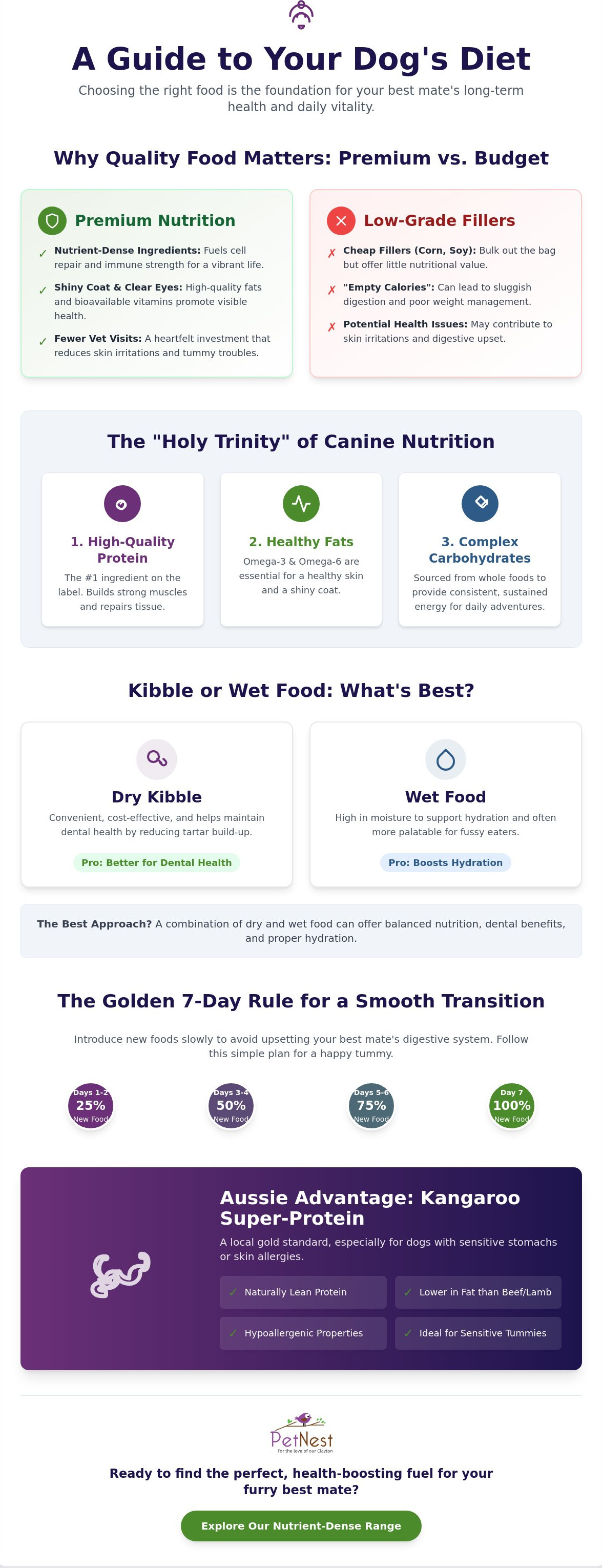
When reading an ingredient list, it’s crucial to know what to look for—and what to avoid. Common low-grade fillers like corn, soy, and ambiguous "meat by-products" often provide "empty calories" without the rich nutritional benefits your dog needs. These ingredients can be hard to digest, sometimes leading to sensitive stomachs and skin issues. In contrast, premium options are nutrient-dense, meaning every bite is packed with high-quality, bioavailable ingredients. While the initial cost may be higher, investing in a high-quality diet can lead to significant long-term veterinary savings by helping to prevent chronic health issues down the track.
The Building Blocks of Vitality: Proteins, Grains, and Life-Stage Essentials
Exceptional canine health is built on a holy trinity of nutrition: high-quality protein for muscle development, healthy fats for skin and coat health, and the right carbohydrates for sustained energy. When you look at a bag of dog food, the very first ingredient should always be a clearly named protein source, such as kangaroo, chicken, or lamb. This signifies that the food is built around the most critical nutrient for your carnivorous companion.
Beyond protein, the role of fatty acids is paramount. Omega-3 and Omega-6, often sourced from fish oil or flaxseed, are the secret to that iconic, glossy "Aussie coat" shine and play a vital role in reducing inflammation. Finally, essential vitamins and minerals should ideally come from whole-food sources like sweet potatoes, blueberries, and spinach, ensuring your dog absorbs them naturally and effectively.
The Kangaroo Advantage: Australia’s Lean Super-Protein
For many Australian dogs, especially those battling sensitive stomachs or persistent skin allergies, kangaroo meat is the gold standard. This lean, wild-caught protein is one of the best-kept secrets in canine nutrition. Its low-fat, high-protein profile makes it incredibly easy to digest compared to richer meats like beef or lamb. Furthermore, because it's a "novel" protein for most dogs, it's less likely to trigger an allergic response. Choosing kangaroo is also a sustainable choice, supporting the responsible management of a natural Australian resource.
Grain-Free vs. Ancient Grains: Finding the Right Balance
The "grain-free" debate can be confusing for many pet parents. For some dogs, particularly those with diagnosed sensitivities, a grain-free diet is essential for digestive harmony and itch-free skin. However, not all grains are created equal. Nurturing "ancient grains" like oats, barley, or sorghum can be a fantastic source of fibre and energy for many dogs, offering a healthy alternative to common allergens like wheat and corn. If you suspect a grain sensitivity, look for signs like excessive scratching, loose stools, or frequent ear infections, and consider a slow transition to a grain-free formula.
Feeding for Life Stages: From Playful Puppies to Golden Seniors
A dog's nutritional needs change dramatically throughout their life. Growing puppies require specific calcium-to-phosphorus ratios to build strong bones, along with higher calorie and protein levels to fuel their boundless energy. As they mature into adulthood, their diet should focus on maintenance. For our golden seniors, nutritional priorities shift again. Look for foods with joint-supporting ingredients like glucosamine and chondroitin to maintain mobility, and a slightly lower calorie density to match their slowing metabolism and prevent weight gain.
Stocking Your Pantry: Comparing Dry, Wet, and Mixed Feeding Options Online
Choosing the right type of dog food online can feel overwhelming, but understanding the core benefits of each format makes it simple. From the convenience of kibble to the hydration of wet food, you can curate the perfect pantry for your pup’s needs without ever leaving home.
Dry dog food, or kibble, is praised for its long shelf-life and dental benefits, as the crunchy texture can help reduce tartar buildup. Wet food, on the other hand, offers superior hydration—a fantastic benefit for dogs who don't drink enough water—and often has a more enticing aroma for fussy eaters. A popular and effective approach is "mixed feeding," where a base of premium kibble is topped with a spoonful of wet food or a healthy topper. This provides textural variety, boosts hydration, and makes mealtime an exciting event. To maintain freshness, always store dry food in a cool, dark place in an airtight container, and refrigerate any opened wet food promptly.
The Case for Premium Dry Dog Food
For busy Australian families, the convenience and cost-effectiveness of premium dry dog food are undeniable. Buying in bulk online ensures you always have a healthy meal on hand. Beyond convenience, modern kibble offers significant health advantages. The mechanical cleaning action of chewing crunchy kibble helps to scrub plaque from a dog's teeth. Furthermore, advanced manufacturing techniques like cold-pressing and air-drying help preserve the delicate nutrients, vitamins, and minerals that old-school, high-heat baking methods can destroy.
Grain-Free Living: A Sanctuary for Sensitive Stomachs
For a pet parent watching their beloved companion suffer from allergies, finding a food that finally stops the "itch-scratch" cycle brings profound emotional relief. This is the sanctuary that grain-free living can offer. By removing common triggers, you create a peaceful internal environment for your dog. The best grain-free formulas replace grains with high-quality, easily digestible carbohydrates like sweet potato, lentils, and peas, which provide sustained energy without the risk of bloating or irritation. At PetNest, we’ve carefully selected PetNest’s range of grain-free options to provide a trusted, curated solution for sensitive Aussie dogs.
Solving the Sensitivity Puzzle: Managing Allergies and Fussy Eaters
One of the most common worries we hear from pet parents is, "My dog is just too fussy for healthy food!" or "I can't figure out what's causing their allergies." These challenges can be frustrating, but with a patient and nurturing approach, they are almost always solvable.
The first step is to distinguish between food intolerances and environmental allergies. A true food allergy often involves the immune system, while an intolerance is a digestive issue. To pinpoint a dietary trigger, vets often recommend an "elimination diet." This involves feeding your dog a single, novel protein source (like kangaroo or turkey) and a single carbohydrate for 8-12 weeks to see if symptoms improve. At the same time, supporting their gut health with probiotics and prebiotics can be transformative, as a balanced gut microbiome is essential for reducing skin inflammation and strengthening the immune system.
The "Itchy Dog" Syndrome: Is it the Food?
Is your dog constantly licking their paws, shaking their head, or suffering from recurrent ear infections? These are classic red flags that a food sensitivity might be at play. A dull, flaky coat is another common sign. The connection lies in the gut; an imbalance in gut flora can lead to a heightened immune response, which manifests externally as irritated skin. The gut-skin axis is powerful. By addressing the internal environment, you can often calm the external symptoms. Adding natural, anti-inflammatory supplements like fish oil can also help soothe inflamed skin from the inside out, providing welcome relief for your itchy mate.
Winning Over the Fussy Eater
Transforming a fussy eater into a food lover is about creating positive, nurturing routines. Start by making their healthy food more enticing. Adding a splash of warm water or bone broth to dry kibble can release its aromas, making it far more appealing. Establish a firm but gentle "15-minute rule": place the food down and if it isn't eaten in 15 minutes, calmly remove it until the next scheduled mealtime. This teaches your dog that food is offered at set times. Finally, use healthy, high-value treats and delicious mince toppers as a bridge to transition them to their new, healthier diet, rewarding them for their adventurous palate.
Creating a Feeding Sanctuary: Transitioning and Elevating the Ritual
Switching your dog to a new, high-quality food is an act of love, and it should be done with care to create a positive experience. The key is the "Golden 7-Day Rule" for transitioning, which gives your dog's digestive system time to adapt and avoid tummy upset. Alongside a smooth transition, it's vital to practice mindful portion control. Pet obesity is a silent epidemic, and following the feeding guidelines on the packaging—adjusted for your dog’s age, breed, and activity level—is crucial for their long-term health.
By choosing Australian-made and sourced dog food, you're not only supporting local businesses but also reducing the environmental paw-print of your pet's diet. At PetNest, we see ourselves as the "Nurturing Curator." We do the research and vetting, so you can skip the stress and focus on what truly matters: the joy and love of the feeding ritual itself.
The 7-Day Transition Guide
A slow and steady transition is vital for protecting the delicate balance of your dog's gut microbiome, preventing digestive distress. Follow this simple, seven-day schedule for a seamless switch:
- Days 1-2: Serve a mix of 25% new food and 75% old food.
- Days 3-4: Adjust to a 50/50 mix of new and old food.
- Days 5-6: Increase to 75% new food and 25% old food.
- Day 7: Transition to 100% of the new sanctuary diet.
Throughout this week, be sure to monitor your dog's stool quality. A healthy stool should be firm and easy to pick up. If you notice any persistent digestive upset, slow the transition down even further.
Why Shop with PetNest? A Fellow Enthusiast's Promise
We understand the trust you place in us when choosing your companion's nutrition. That's why we've made the process of buying grain-free dog food online in Australia as simple and reassuring as possible, with convenient home delivery right to your door. Our promise is to be more than just a store; we are your trusted peer and a fellow enthusiast in the wonderful journey of pet parenthood. Beyond food, you’ll find a carefully curated selection of health and hygiene products to complement a brilliant diet and create a complete wellness sanctuary for your pet. We've done the research so you can focus on the love.
Ready to build a foundation of health for your best mate? Explore our curated range of premium dog food and treats today.
Frequently Asked Questions
How much food should I actually be feeding my dog each day?
The ideal amount depends on your dog's age, breed, weight, and activity level. Always start with the feeding guide on the food packaging as a baseline, but be prepared to adjust. A highly active working dog will need more calories than a senior dog who naps most of the day. The best measure is your dog's body condition—you should be able to feel their ribs but not see them.
Is grain-free dog food really better for my pet?
Grain-free dog food is an excellent choice for dogs with specific grain allergies or sensitivities, which can cause skin irritation and digestive upset. For other dogs, high-quality "ancient grains" can be a healthy part of their diet. The most important factor is the overall quality and digestibility of the ingredients, not just the presence or absence of grains.
Can I mix different brands of dog food together?
While it's generally safe, it's not always ideal. Different brands have different nutritional balances, and mixing them can disrupt that balance. If you do mix, it's best to stick with brands that have similar protein and fat levels. A better way to add variety is through "mixed feeding"—using a consistent, high-quality kibble as a base and adding a wet food topper from the same brand.
What should I do if my dog has a sudden allergic reaction to their food?
If your dog shows severe symptoms like facial swelling, hives, or difficulty breathing, seek immediate veterinary attention. For milder reactions like itching or digestive upset, stop feeding the new food immediately and switch back to their old food. Contact your vet to discuss the symptoms and plan a proper elimination diet to identify the trigger ingredient.
How do I know if my dog is at a healthy weight?
You should be able to easily feel your dog's ribs under a thin layer of fat. When looking at them from above, they should have a visible waistline (an "hourglass" figure). From the side, their abdomen should tuck up from their chest. If you can't feel their ribs or they lack a waist, they may be overweight.
Is it safe to feed my dog raw kangaroo mince from the human section of the supermarket?
While kangaroo is a great protein, mince intended for human consumption carries a higher risk of bacteria like Salmonella and E. coli, which can make your dog sick. It's much safer to use kangaroo products specifically formulated and prepared for pets, such as commercially prepared raw diets (BARF) or premium kibble that uses kangaroo as its protein source.
How long does a bag of dry dog food stay fresh after opening?
For optimal freshness and nutritional integrity, it's best to use an open bag of dry dog food within 4-6 weeks. To keep it fresh, store the kibble in its original bag (which has a fat-proof barrier) and place that bag inside a clean, airtight container in a cool, dark place.
Does my puppy really need specialised puppy food until they are one year old?
Yes, absolutely. Puppy food is specially formulated with the higher levels of protein, fat, and specific nutrients like DHA for brain development and precise calcium-to-phosphorus ratios for healthy bone growth. Feeding a complete and balanced puppy formula for the first 12 months (or up to 18-24 months for large breeds) is crucial for setting them up for a healthy life.