Imagine standing in your kitchen, holding a fresh bag of high-quality food, yet feeling a flicker of hesitation instead of excitement. You want the very best for your furry family member, but the memory of the last "tummy trouble" accident on the rug makes you pause. It's completely natural to feel anxious about changing your best friend's diet, especially when you're trying to figure out how to switch dog food amidst 2026's record-high prices, which sit 33% higher than in 2019, and those confusing new AAFCO "Pet Nutrition Facts" labels. You're part of a dedicated community of caregivers who just want a happy, healthy dog, and we're here to help you get there safely.
We believe a food transition is a gentle dialogue between you and your dog's digestive system, one that requires patience over speed. We promise to show you the exact, step-by-step method to move your pup to their new favourite meal without the stress of digestive upset or the frustration of a picky eater who refuses to budge. You'll learn the golden ratios for a seamless blend, how to use the latest labelling transparency to your advantage, and how to ensure your dog stays energetic with firm stools throughout the entire process.
Key Takeaways
- Understand the delicate science of the canine gut microbiome and why a slow introduction prevents the body’s "flush" response.
- Master the 10-day gold standard schedule to learn exactly how to switch dog food using precise weight-based measurements rather than just "eyeballing" the scoop.
- Gain confidence using the "Poo-mometer" and the "Three-Day Rule" to monitor your dog's health and know when to pause the transition.
- Learn practical strategies for managing emergency "cold turkey" switches and gentle ways to tempt a fussy eater into trying new scents.
- Discover the benefits of hypoallergenic Aussie proteins like Kangaroo, providing a nutritional sanctuary for dogs with sensitive systems.
Why Your Dogs Tummy Needs a Gentle Introduction
Your dog's digestive system is a finely tuned sanctuary, a bustling ecosystem of billions of tiny microbes working in harmony to keep your best mate wagging. When we consider how to switch dog food, we're really talking about managing this internal community. Unlike humans, who might enjoy a spicy curry one night and a salad the next, dogs thrive on consistency. Their bodies produce specific enzymes tailored to the proteins and fats they consume daily. If your pup has been eating chicken-based kibble for years, their gut is a specialised "chicken-processing factory."
A sudden change feels like a shock to this delicate system. When the gut encounters unfamiliar ingredients without warning, it often triggers a "flush" response. This is the body's way of quickly expelling what it doesn't yet know how to process, leading to the dreaded "accidents" on your clean rug. By taking a slow approach, you allow your dog's microbiome to recruit new bacterial colonies that specialise in breaking down different ingredients. This gradual transition ensures that the gut remains a safe haven rather than a site of digestive conflict.
The Science of the Canine Microbiome
Deep within your dog's belly, specific bacteria thrive on the unique balance of fibres and proteins in their current bowl. Gaining a better understanding dog food nutrition helps us see that these microbes need time to adapt. For example, moving from a standard grain-in diet to a premium Australian kangaroo protein requires a shift in the bacterial population. It can take several days for new colonies to form and thrive. A "slow and steady" method prevents long-term digestive sensitivity by giving the gut wall time to strengthen and adapt to the new nutritional profile without inflammation.
Signs Your Dog is Ready for a Change
Sometimes, the signs that it's time for a new menu are subtle. You might notice a lacklustre coat that’s lost its Aussie summer shine, or perhaps your mate seems a bit flat during your morning walk at the park. These can be signals that their current diet isn't providing the vitality they deserve. Other times, the need is more urgent, such as when a puppy reaches the right age to move onto adult formulations or if you notice constant paw-licking and itchy skin. Recognising these cues is the first step in learning how to switch dog food to a higher-quality option that restores their energy and brings back that healthy, firm stool we all love to see.
The 10-Day Gold Standard Transition Schedule
Building on the science of the microbiome we explored earlier, the actual process of how to switch dog food is best viewed as a ten-day journey of care. While some guides suggest a fortnight, we've found that ten days provides the perfect balance between caution and progress. This period allows the "gut dialogue" to remain clear and consistent without dragging out the process. Success hinges on precision. Instead of using a standard cup or "eyeballing" the scoop, we recommend using a digital kitchen scale. Since different brands have varying densities and shapes, 50 grams of one kibble might take up significantly more space than 50 grams of another. Measuring by weight ensures your mate's tummy isn't surprised by hidden volume changes.
Hydration is another vital factor, especially under the harsh Australian sun. Digestion is a water-intensive process. As your dog's system works harder to adapt to new proteins and fibres, their need for fresh, cool water increases. Ensure their bowl is always topped up, particularly during our warmer months. If you are transitioning to a premium grain free pet food, the increased nutrient density might mean they need a little extra moisture to help everything move along smoothly. This support helps the new nutrients settle into their system with ease.
The Step-by-Step Mixing Guide
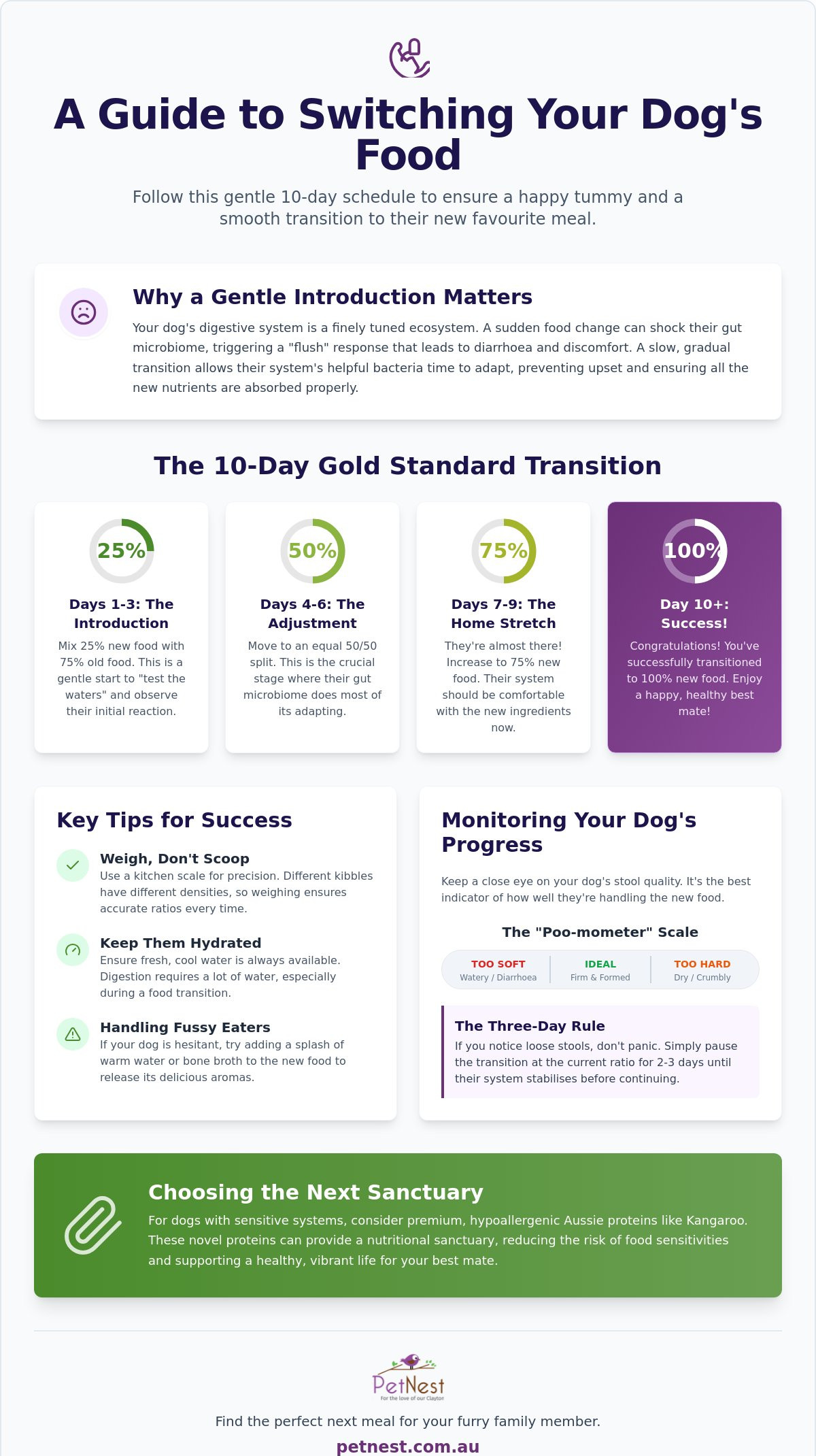
- Days 1-3: The 25% Introduction. This "test the waters" phase is about observing their reaction. Mix one part new food with three parts of the old favourite.
- Days 4-6: The 50% Halfway House. This is the pivotal point where most internal adjustments happen. Use an equal split of both foods.
- Days 7-9: The 75% Home Stretch. By now, their stool should be firming up nicely and their energy levels should be stable.
- Day 10: Full Transition. You've made it to 100% new food. Celebrate this milestone with a celebratory pat and a happy, healthy pup.
Tips for Accurate Mixing
To make busy mornings easier, try pre-mixing your daily portions in airtight containers on a Sunday night. This ensures the ratios are perfect even when you're rushing out the door. If you are mixing wet and dry food, try to keep the ratios consistent across both textures to avoid confusing their palate. Understanding how to switch dog food effectively means being a nurturing curator of every meal. If your dog's tummy seems a bit "off" at any stage, simply stay at the current ratio for an extra day or two before moving forward. Patience is your greatest tool for a happy tummy.
Monitoring Progress: The "Poo-mometer" and Beyond
As you move through the gold standard schedule, your role shifts from measurer to observer. You're looking for signs that the new diet is being welcomed by your dog's system. While we often focus on the bowl, the most reliable feedback actually comes from the other end. Monitoring the "Poo-mometer" might not be the most glamorous part of being a pet parent, but it's the quickest way to understand how to switch dog food successfully for your specific dog. Every pup is an individual, and their internal response is the only guide that truly matters.
If you notice things getting a bit messy, don't feel like you've failed. This is where the "Three-Day Rule" comes into play. If your dog's stool becomes soft or they seem a bit gassy, simply stop increasing the new food. Stay at the current ratio for three full days until their system settles. This pause acts as a safety net, giving those new bacterial colonies we mentioned earlier a chance to catch up. Probiotics can also be a wonderful bridge here, providing a boost of "good" bacteria to support the transition and soothe any temporary inflammation.
Decoding the Stool
Consistency is key. A "perfect" stool is firm, easy to pick up, and holds its shape. During a transition, it's normal to see a "soft-serve" consistency for a day or two as the microbiome adapts. You might also notice a colour change. If you've switched to a rich, iron-dense protein like kangaroo or beef, the stool will often appear darker than it did on a chicken-based diet. This isn't a cause for alarm; it's simply a reflection of the new nutrients. However, there are clear red flags that require a pause and a chat with your local vet:
- Persistent vomiting or a sudden refusal to drink water.
- Extreme lethargy or a lack of interest in their favourite walk.
- Blood in the stool or severe, watery diarrhoea that lasts more than 24 hours.
Enthusiasm and Energy Levels
Watch your dog's behaviour at mealtime. Are they "picking out" the new kibble and leaving the old? This is a great sign they love the flavour. Beyond the bowl, look for the "glow-up" that happens within the first fortnight. A high-quality protein switch can revitalise an older dog, giving them a spring in their step you haven't seen in years. You might also notice their breath smells fresher and their coat begins to feel softer under your hand. Learning how to switch dog food correctly isn't just about avoiding accidents; it's about unlocking this new level of vitality for your best mate.
Handling the "Uh-Oh" Moments: Emergency Switches and Picky Eaters
Even the most organised pet parent can find themselves staring at an empty bag of kibble on a Sunday evening. Life gets busy, and sometimes the transition doesn't go exactly to plan. If you find yourself in a "cold turkey" situation where the old food has run out, don't panic. While it isn't the gold standard, there are ways to manage a sudden change without causing a total tummy meltdown. Understanding how to switch dog food in a pinch is about damage control and providing as much comfort as possible to your dog's digestive sanctuary.
The key during an unplanned switch is to avoid overwhelming the system. If your mate has a sensitive stomach, you might need to lean on a few kitchen staples to help them through the first couple of days. Remember that your goal is to keep them comfortable and hydrated. If you notice any signs of significant distress, it's always best to consult your local vet, but for most healthy dogs, a few simple adjustments can bridge the gap safely.
The Emergency Transition Toolkit
When you have to make an immediate switch, try offering smaller, more frequent meals rather than two large ones. This reduces the workload on the gut at any one time. You can also mix the new food with plain, boiled pumpkin or white rice to provide some gentle fibre. This bland addition acts as a soothing buffer that helps the gut lining remain calm while it encounters unfamiliar proteins. If you need a gentle option to help settle their system, keeping some high-quality wet pet food on hand can provide the moisture and familiar texture they need to stay happy.
Winning Over the Picky Palate
Some dogs are naturally more suspicious of change. If your mate is a fussy eater who turns their nose up at the new bowl, it's usually about scent and texture rather than a lack of hunger. Try adding a splash of warm water to the kibble. This simple trick releases the fatty acid aromas that dogs find irresistible. You can also try hand-feeding the new pieces as if they were special rewards. This builds a positive emotional association with the new flavour, making them feel safe and celebrated during mealtime. Ensure the house is quiet and stress-free when you serve the bowl, as a nervous dog is far less likely to try something new.
Whatever you do, never try to "starve" a dog into eating. This approach breaks the trust between you and your animal and can lead to serious health issues, especially in smaller breeds. If they refuse to eat for more than 24 hours, it's time to take a step back. Using a tasty "topper" like a spoonful of grain free pet food can often bridge the gap. It provides a familiar, enticing texture that encourages them to dive in. Learning how to switch dog food for a picky eater is a lesson in patience and empathy, ensuring your best mate feels nurtured every step of the way.
Choosing the Next Sanctuary: Premium Aussie Proteins
Now that you've discovered the gentle rhythm of how to switch dog food, it's time to choose the final destination for your mate's nutritional journey. Selecting a new diet is about more than just reading the back of a bag. It's about finding a sanctuary of health that supports their longevity. In Australia, we're blessed with access to some of the world's most pristine and unique protein sources. Making the right choice here ensures that the 10-day transition you've just completed leads to a lifetime of vitality and fewer trips to the vet.
At PetNest, we act as a nurturing curator. We do the heavy lifting of selection so you can focus on the joy of the relationship. Our range is designed to be a safe haven for every breed and life stage, ensuring that the food in the bowl matches the love in your heart. By choosing proteins that are native to our landscape and naturally suited to canine biology, we help you maintain that "gut sanctuary" we've worked so hard to build over the last fortnight.
The Power of Kangaroo Meat
Kangaroo is our local hypoallergenic superfood. It's exceptionally lean, making it ideal for pups who need to keep their weight in check, yet it's packed with high-quality protein. Because kangaroo is a novel protein, it's often the best choice for dogs struggling with skin irritations or chronic stomach sensitivities that haven't cleared up on traditional diets. If you're looking for a premium transition option, our Kangaroo Dog Food provides a nutrient-dense foundation that is as kind to the planet as it is to your dog's tummy.
Nurturing with Grain-Free Options
Nurturing your dog with Grain Free Dog Food is another way to offer digestive peace of mind. By removing common fillers like wheat or corn, we focus the recipe on high-quality meat and wholesome vegetables. This cleaner approach to nutrition often results in noticeable changes, such as reduced flatulence and fresher breath. It gives their system a break from processing complex grains so they can focus on absorbing the goodness that fuels their daily adventures. It's a simple shift that can make a world of difference to their overall comfort.
To ensure you never face another "uh-oh" moment like the ones we discussed earlier, consider setting up a recurring delivery. It's a simple way to keep your pantry stocked and your dog's tummy happy without the stress of last-minute trips to the shops. Knowing how to switch dog food is a vital skill for any caregiver, but having the right food arrive at your door exactly when you need it makes the journey effortless. Your dog's health is a lifelong conversation, and we're here to help you make every word count.
Empowering Your Dog's Health Journey
Transitioning your best mate to a new diet is a beautiful act of care that strengthens the bond you share. By following the 10-day gold standard schedule and carefully monitoring the "Poo-mometer", you've transformed a potentially stressful change into a gentle dialogue with your dog's digestive system. You now have the confidence to manage "uh-oh" moments and the knowledge to choose proteins that truly nourish their unique needs. Mastering how to switch dog food ensures that every bowl you serve is a step toward more energy, a shinier coat, and long-term vitality.
As an Australian owned and operated business, we're proud to be your trusted peer in pet wellness. Our curated selection of hypoallergenic kangaroo and grain-free options is designed to be a safe haven for sensitive tummies. We want to make this journey as seamless as possible for you and your furry family member. Explore our Nurturing Range of Premium Dog Food today and enjoy the peace of mind that comes with free delivery on bulk orders. Your dog's happy tummy is our greatest celebration, and we can't wait to see them thrive on their new Aussie-sourced menu.
Common Questions About Your Dog's Dietary Transition
Can I switch my dog's food all at once if the new food is better quality?
No, even if you are moving to a premium Australian brand, a sudden switch can shock your dog's system. Their gut microbes are specialists that need time to adapt to new proteins and fibres. Switching "cold turkey" often leads to digestive upset and loose stools. It's much kinder to follow a gradual mixing schedule to keep their internal sanctuary stable and happy during the change.
How long does it take for a dog's stomach to adjust to new food?
Most dogs require between seven and ten days for their digestive enzymes and microbiome to fully adjust to a new diet. While you might see firm stools within a week, the internal bacterial colonies are often still stabilising. For dogs with known sensitivities, extending this period to fourteen days provides an extra layer of safety and ensures their body is processing the new nutrients efficiently.
What should I do if my dog gets diarrhoea during the transition?
If your mate develops loose stools, you should immediately stop increasing the amount of new food and stay at the current ratio. This is the "Three-Day Rule" where you give the gut time to settle before moving forward. If the issue persists for more than 24 hours or if they seem lethargic, it's best to contact your local vet to rule out other health concerns.
Is it okay to mix different brands of dog food together?
Mixing different brands is perfectly fine and is actually a core part of learning how to switch dog food correctly. As long as both foods are nutritionally complete, blending them won't cause any harm. In fact, many Aussie pet parents choose to mix a high-quality dry kibble with a premium wet food topper to add variety and hydration to their dog's daily routine.
My dog is picking out the old food and leaving the new one, what do I do?
If your dog is avoiding the new pieces, try adding a small amount of warm water to the bowl to release tempting aromas. This often masks the "newness" and makes the whole meal smell more enticing. You can also try hand-feeding the new kibble as a treat during the day to build a positive association with the flavour before it appears in their main dinner bowl.
Can I use probiotics to help my dog switch food more easily?
Yes, probiotics are a wonderful tool to support your dog's gut health during any dietary change. They provide a boost of beneficial bacteria that help crowd out the microbes that can cause gas and bloating. Using a probiotic supplement for a few days before and during the transition can make the entire process much smoother for dogs with particularly sensitive digestive systems.
How do I know if the new food is actually agreeing with my dog?
You'll know the new food is a success when you see firm, dark stools and a noticeable boost in your dog's daily energy levels. Within the first fortnight, look for a shinier coat and clearer eyes as signs that the nutrients are being absorbed properly. If their breath smells fresher and they approach the bowl with genuine excitement, you've successfully found a new nutritional sanctuary for your mate.
Is a 7-day transition enough for most Aussie breeds?
While a 7-day transition works for some robust Aussie breeds, a 10-day schedule remains the gold standard for how to switch dog food safely. Those extra three days act as a vital buffer for the digestive system, reducing the risk of a sudden "flush" response. It's a small investment of time that pays off in long-term gut health and fewer messy accidents on your rugs.